

Sachiko Hayashi, Japan/Sweden
Born in Tokyo, lives and works in Stockholm
Sachiko Hayashi is a Japanese-born visual artist based in Sweden whose practice lies at the intersection of contemporary art and new media. Working across video, net art, interactive installation, audiovisual and performance-based practices, and more recently generative AI, she explores questions of identity, otherness, memory, knowledge, and time.
Hayashi’s work is deeply informed by her international and multidisciplinary background and by experiences of otherness related to gender, ethnicity, race, and aesthetics. She examines how identity is shaped within societies increasingly structured by science, technology, mass media, and systems of representation, often questioning what is considered desirable, what is excluded, and how these distinctions affect both the individual psyche and society.
Performance and interactivity have played a central role in her practice. Through moving image, sound, digital environments, and responsive technologies, she creates situations in which the viewer’s presence, perception, and actions become part of the work. Her practice has involved technologies ranging from early net art and interactive media to gesture-controlled audiovisual systems, mixed reality, and AI-generated image and video.
Since the 1990s, Hayashi has developed an internationally exhibited body of work while also contributing to the development of digital art through artistic networks, publishing, and curatorial initiatives. Her work has been presented at venues and festivals including the Statens Museum for Kunst in Copenhagen, Transmediale in Berlin, FILE – Electronic Language International Festival in São Paulo, and numerous institutions and platforms across Europe, Asia, and the United States.
In her recent AI-generated works, Hayashi returns to long-standing concerns with femininity, memory, cultural representation, and the ambiguous relationship between creativity and darkness. Rather than marking a rupture with her earlier practice, these works extend an artistic investigation developed over several decades into how technologies shape images, identities, and human experience.
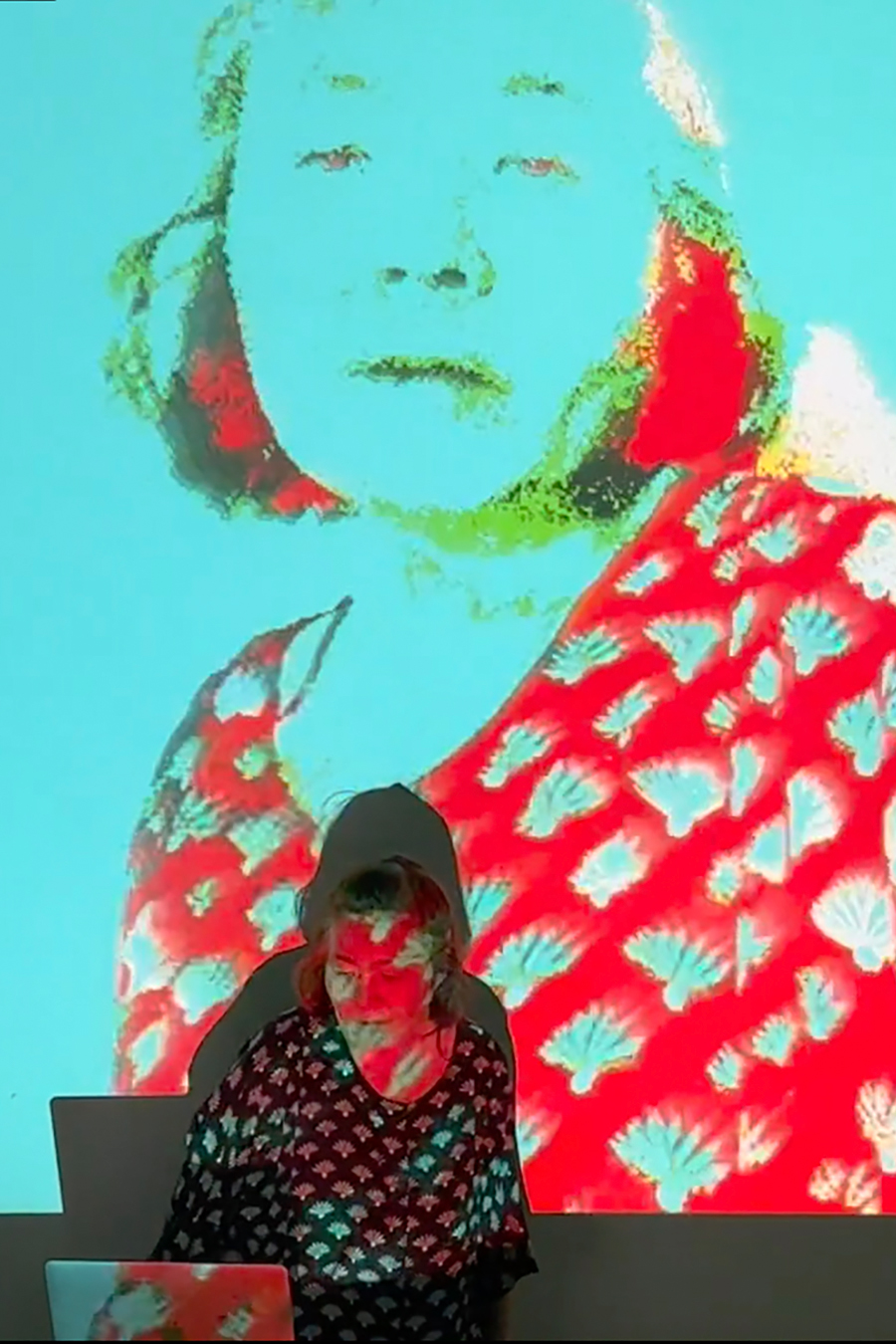
Sachiko Hayashi. Courtesy the artist.
2026© Live Action. ALL Rights Reserved.
